

Explore Azeroth anew
What's New in The Burning Crusade
The Burning Crusade compared with Vanilla and Classic Era
The Burning Crusade expands Classic’s level-60 world into level-70 Outland, with new races, nine-tier talent trees and a different endgame. Compare it with Vanilla and Classic Era below. Calculator data is pinned to the modern Anniversary client; historical patch notes are labeled separately.
Calculator data: Anniversary 2.5.6.70006. Historical changes and modern phase unlocks are labeled separately.
The familiar foundation
The same nine classes, two-primary-profession limit, one talent point per level starting at 10, and much of Azeroth remain. TBC changes their available races, talent depth, spell ranks, stat conversions and endgame rewards.
Leveling & progression
1 verified difference
TBC extends progression to level 70 and 61 talent points, with seven Outland zones and new dungeon and reputation rewards.
Previously: Vanilla and Classic Era stop at level 60, with 51 talent points.
Now: TBC extends progression to level 70 and 61 talent points, with seven Outland zones and new dungeon and reputation rewards.
Azeroth leveling
The late-TBC rules reduce experience requirements at levels 20–60 and raise quest experience at levels 30–60.

Why it matters: Ten more points make deeper builds and different hybrid combinations possible. Choose your level in the calculator to see exactly which spell ranks and talents are available.
Races & factions
1 verified difference
Blood Elves bring Paladins to the Horde, and Draenei bring Shamans to the Alliance. Both add starting zones, racial abilities and different base attributes.
Previously: Classic Era has eight races; Paladins are Alliance-only and Shamans are Horde-only.
Now: Blood Elves bring Paladins to the Horde, and Draenei bring Shamans to the Alliance. Both add starting zones, racial abilities and different base attributes.
Blood Elf choices
Hunter, Mage, Paladin, Priest, Rogue and Warlock.  Arcane Torrent adds a short-range silence and restores resources;
 Mana Tap supplies its charges.
Draenei choices
Hunter, Mage, Paladin, Priest, Shaman and Warrior.  Gift of the Naaru adds periodic healing; the relevant Presence racial supports party hit chance.
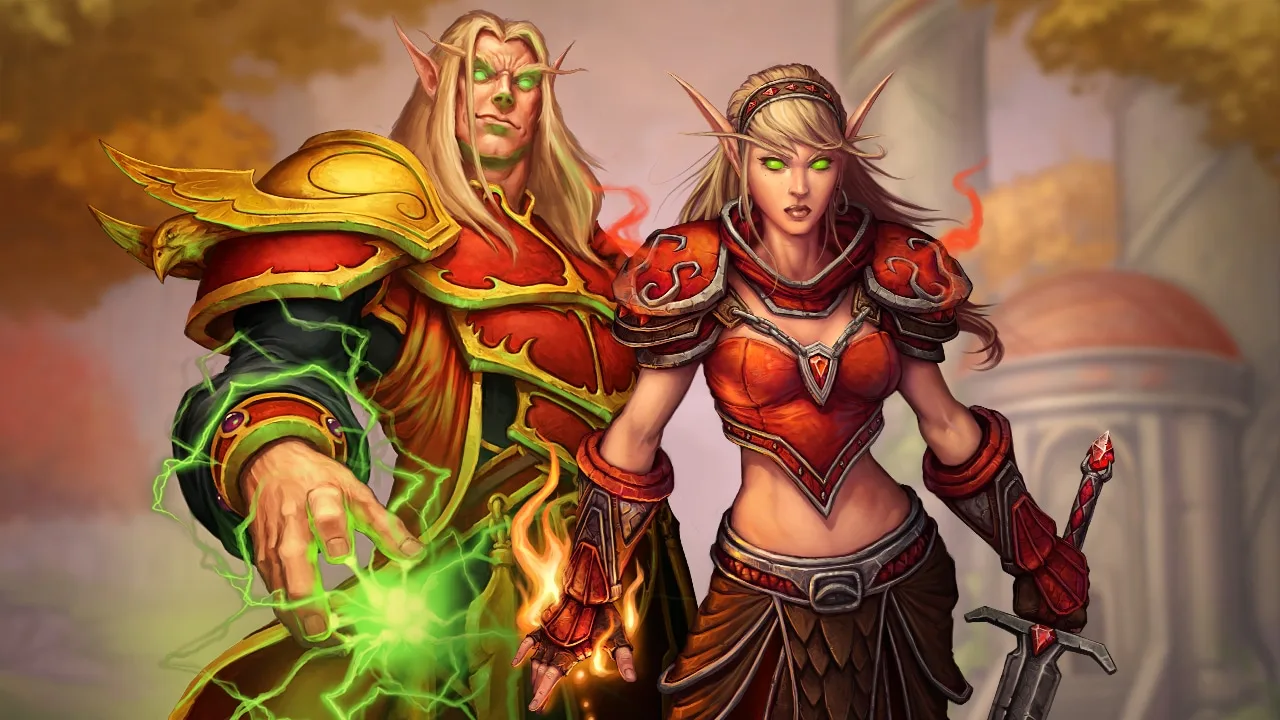

Why it matters: Race choice changes party utility and resource management. The calculator uses the TBC client’s race/class combinations and racial effects.
All nine classes
9 verified differences

 Spell Reflection,
 Devastate and
 Rampage add new defensive and offensive decisions.
Previously: The Classic Warrior uses level-60 spell ranks and the 1.12 talent trees.
Now: Spell Reflection, Devastate and Rampage add new defensive and offensive decisions.
How the role changes
Protection gains a deeper weapon-and-shield rotation; Arms and Fury gain additional talent support. Rage generation is normalized, so the Classic damage-to-rage model must not be reused unchanged.
Why it matters: Use the TBC spellbook and build comparison to inspect rank, cost, cooldown and talent changes. These are highlights, not a complete combat simulation.

 Crusader Strike,
 Avenger’s Shield and
 Divine Illumination deepen all three roles.
Previously: The Classic Paladin uses level-60 spell ranks and the 1.12 talent trees.
Now: Crusader Strike, Avenger’s Shield and Divine Illumination deepen all three roles.
How the role changes
Horde Paladins become playable.  Avenging Wrath adds a burst window; the final TBC Crusader Strike cooldown is six seconds, unlike its original ten-second implementation.
Why it matters: Use the TBC spellbook and build comparison to inspect rank, cost, cooldown and talent changes. These are highlights, not a complete combat simulation.

 Steady Shot,
 Aspect of the Viper and the new talent capstones reshape ranged play.
Previously: The Classic Hunter uses level-60 spell ranks and the 1.12 talent trees.
Now: Steady Shot, Aspect of the Viper and the new talent capstones reshape ranged play.
How the role changes
Hunter remains a mana class. Agility gives one ranged attack power in TBC, rather than Vanilla’s two.  Auto Shot timing and pet scaling remain central to planning.
Why it matters: Use the TBC spellbook and build comparison to inspect rank, cost, cooldown and talent changes. These are highlights, not a complete combat simulation.

 Mutilate,
 Shadowstep,
 Shiv and
 Cloak of Shadows broaden damage and control choices.
Previously: The Classic Rogue uses level-60 spell ranks and the 1.12 talent trees.
Now: Mutilate, Shadowstep, Shiv and Cloak of Shadows broaden damage and control choices.
How the role changes
 Combat Potency supports off-hand energy generation. Poison and
 Lockpicking skills follow player level ×5, reaching 350 at level 70, rather than profession skill 375.
Why it matters: Use the TBC spellbook and build comparison to inspect rank, cost, cooldown and talent changes. These are highlights, not a complete combat simulation.

 Vampiric Touch,
 Pain Suppression,
 Circle of Healing and
 Prayer of Mending expand support roles.
Previously: The Classic Priest uses level-60 spell ranks and the 1.12 talent trees.
Now: Vampiric Touch, Pain Suppression, Circle of Healing and Prayer of Mending expand support roles.
How the role changes
 Shadowfiend adds a mana tool and
 Shadow Word: Death adds instant damage with a drawback. Late-TBC
 Fear Ward is available to all Priests at level 20.
Why it matters: Use the TBC spellbook and build comparison to inspect rank, cost, cooldown and talent changes. These are highlights, not a complete combat simulation.

 Dual Wield,
 Shamanistic Rage,
 Totem of Wrath and
 Earth Shield support distinct specializations.
Previously: The Classic Shaman uses level-60 spell ranks and the 1.12 talent trees.
Now: Dual Wield, Shamanistic Rage, Totem of Wrath and Earth Shield support distinct specializations.
How the role changes
Draenei make Alliance Shamans possible.  Bloodlust or
 Heroism adds a powerful haste window; Outland ranks and revised mana tools change rotation efficiency.
Why it matters: Use the TBC spellbook and build comparison to inspect rank, cost, cooldown and talent changes. These are highlights, not a complete combat simulation.

 Arcane Blast,
 Spellsteal,
 Dragon’s Breath and
 Summon Water Elemental add new options.
Previously: The Classic Mage uses level-60 spell ranks and the 1.12 talent trees.
Now: Arcane Blast, Spellsteal, Dragon’s Breath and Summon Water Elemental add new options.
How the role changes
Arcane trades mana for burst, Fire gains close-range control, and Frost gains pet utility. In the late-TBC rules,  Ice Block is trainable and
 Icy Veins is a Frost talent.
Why it matters: Use the TBC spellbook and build comparison to inspect rank, cost, cooldown and talent changes. These are highlights, not a complete combat simulation.

 Unstable Affliction,
 Summon Felguard,
 Shadowfury and
 Seed of Corruption extend each role.
Previously: The Classic Warlock uses level-60 spell ranks and the 1.12 talent trees.
Now: Unstable Affliction, Summon Felguard, Shadowfury and Seed of Corruption extend each role.
How the role changes
 Fel Armor and
 Ritual of Souls add utility. Final TBC
 Curse of the Elements also covers Arcane and Shadow, replacing the separate
 Curse of Shadows.
Why it matters: Use the TBC spellbook and build comparison to inspect rank, cost, cooldown and talent changes. These are highlights, not a complete combat simulation.

 Mangle,
 Tree of Life,
 Lifebloom and
 Cyclone give forms and healing new tools.
Previously: The Classic Druid uses level-60 spell ranks and the 1.12 talent trees.
Now: Mangle, Tree of Life, Lifebloom and Cyclone give forms and healing new tools.
How the role changes
 Flight Form unlocks at level 68. Swift Flight Form is a separate level-70 quest chain with Artisan Riding and reputation requirements, rather than an automatic trainer upgrade.
Why it matters: Use the TBC spellbook and build comparison to inspect rank, cost, cooldown and talent changes. These are highlights, not a complete combat simulation.
Dungeons & raids
1 verified difference
TBC adds heroic five-player dungeons, ten-player Karazhan and Zul’Aman, and 25-player raids through Sunwell Plateau.
Previously: Vanilla endgame primarily uses 20- and 40-player raids; five-player dungeons have no heroic setting.
Now: TBC adds heroic five-player dungeons, ten-player Karazhan and Zul’Aman, and 25-player raids through Sunwell Plateau.
Tier 5
Serpentshrine Cavern and The Eye add Lady Vashj and Kael’thas encounters. Anniversary opened these in May 2026.
Later original content
Black Temple, Mount Hyjal, Zul’Aman and Sunwell belong to later original milestones; historical notes and modern unlock dates are separate in the archive.


Why it matters: Attunements, heroic keys and reputation rewards become part of gearing. Raid openings follow the selected modern realm’s phase schedule.
PvP
1 verified difference
TBC introduces rated 2v2, 3v3 and 5v5 Arena teams, spendable Honor and PvP gear with Resilience.
Previously: Vanilla PvP rewards are tied to the original Honor ranking system. Classic Era uses its later revised ranking rules.
Now: TBC introduces rated 2v2, 3v3 and 5v5 Arena teams, spendable Honor and PvP gear with Resilience.

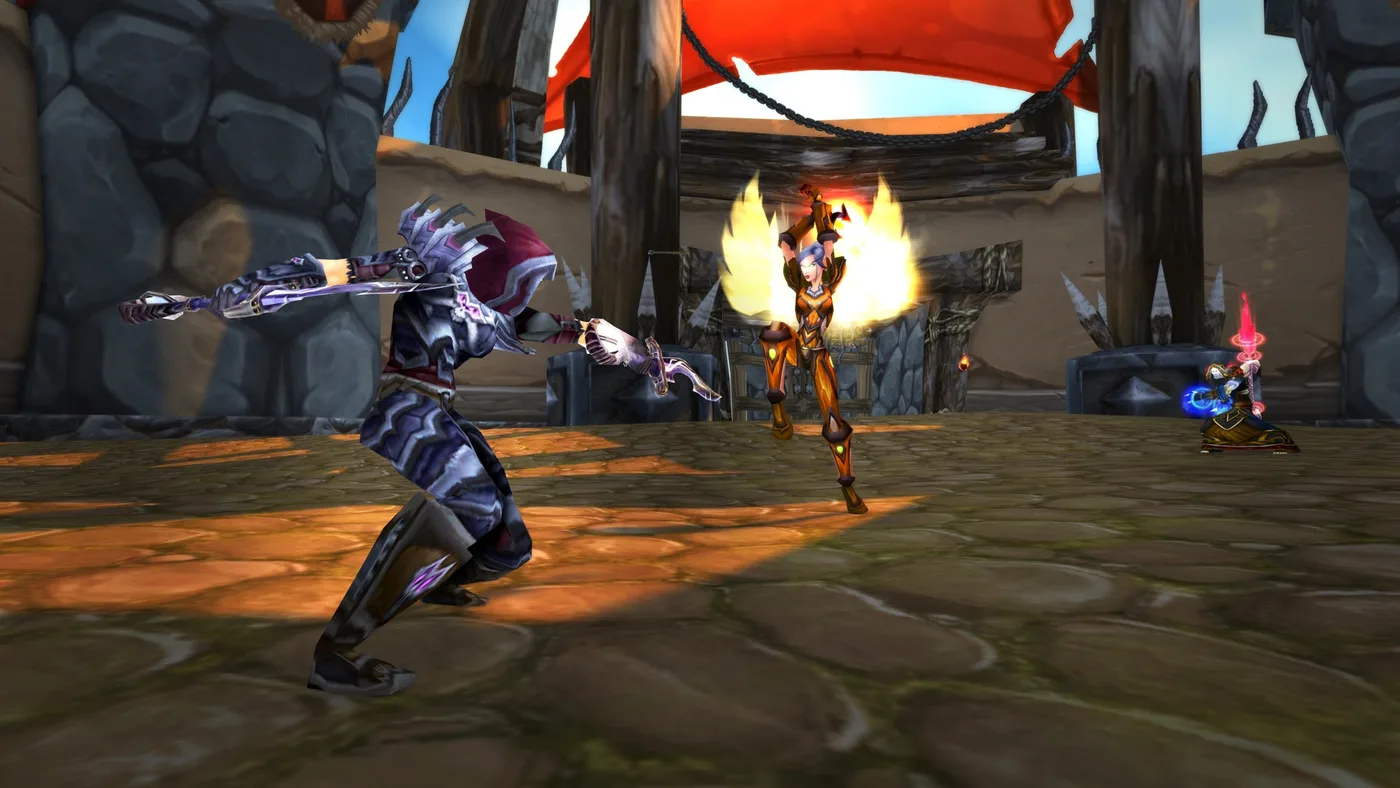

Why it matters: PvP builds need to weigh burst, control, dispels and survivability rather than only sustained raid damage.
Professions
1 verified difference
 Jewelcrafting adds gems and socket choices. Master profession ranks extend primary and secondary tradeskills to 375, with Outland materials and trainers.
Previously: Vanilla professions generally stop at skill 300 and have no Jewelcrafting profession.
Now: Jewelcrafting adds gems and socket choices. Master profession ranks extend primary and secondary tradeskills to 375, with Outland materials and trainers.
Choose a route
Trainer prices and NPC coordinates are sourced from the original 2.4.3 reference database. Reputation, cooldowns and modern phase restrictions still matter; check acquisition notes before buying a recipe.

Why it matters: The TBC guides plan recipes and gathering through 375, identify trainer and vendor unlocks and keep recipe purchases separate from material costs. Rogue skills instead cap at level ×5, reaching 350.
Outland & flying
1 verified difference
Outland adds personal flying mounts, Netherwing progression and Sha’tari Skyguard and Ogri’la daily quests.
Previously: Vanilla traversal uses ground mounts and flight paths.
Now: Outland adds personal flying mounts, Netherwing progression and Sha’tari Skyguard and Ogri’la daily quests.

Why it matters: Riding costs become a major planning decision; reputation can offer long-term goals beyond raid schedules.
Combat rules & editions
2 verified differences
TBC uses combat ratings, revised class attribute conversions, stronger armor scaling above level 59 and Intellect-scaled Spirit mana regeneration.
Previously: Vanilla’s level-60 attribute conversions and flat equipment percentages are not valid at level 70.
Now: TBC uses combat ratings, revised class attribute conversions, stronger armor scaling above level 59 and Intellect-scaled Spirit mana regeneration.
Spell ranks and downranking
New spell ranks continue through level 70. Low-level ranks have spell-power penalties; healing-over-time effects from separate casters can coexist.
Why it matters: The same amount of Agility or rating does not imply the same critical chance as Classic. The TBC calculator uses separate level/race base-stat tables and level-70 combat rules.
This calculator imports the modern Anniversary client, build 2.5.6.70006. Anniversary carries modern conveniences, including dual specialization from level 40, while raids unlock in phases.
Previously: Original TBC released in 2007 after the December 2006 prepatch; its systems evolved through 2.4.3.
Now: This calculator imports the modern Anniversary client, build 2.5.6.70006. Anniversary carries modern conveniences, including dual specialization from level 40, while raids unlock in phases.
Why it matters: The game-version selector is TBC, not a claim that every original or modern realm has identical rules. Saved links retain the calculator and client-data versions.